In recent years, the surge of software-based products and the rise of Agile frameworks have significantly reshaped product management, introducing various roles and specializations. This evolution has created misconceptions about the responsibilities of product managers and product owners, leading to confusion about their unique value in different business contexts.
Defining Roles: Product Owner vs Product Manager
Product Owner
The product owner is a Scrum-specific role, accountable for maximizing the value of the product through:
- Managing the product backlog.
- Communicating the product goal.
- Representing stakeholders.
- Ensuring alignment with the product roadmap.
Product Manager
In contrast, the product manager is a cross-functional role responsible for:
- Developing a multiyear product strategy.
- Discussing technology roadmaps with R&D.
- Creating go-to-market plans with marketing and sales.
- Improving margins and reducing costs with supply chain partners.
- Gathering customer data and meeting with the C-suite to enhance business operations.
Choosing the Right Role for Your Business Needs
When to Hire a Product Owner
If your focus is on delivering a product, a product owner is essential. They handle features, user stories, backlog prioritization, and Agile sprints, ensuring the product development process runs smoothly.
When to Hire a Product Manager
If you aim to build a business around a new product and explore growth opportunities, a product manager is crucial. They bring a broader skill set, focusing on strategic thinking, market analysis, and cross-functional leadership.
The Value of a Great Product Manager
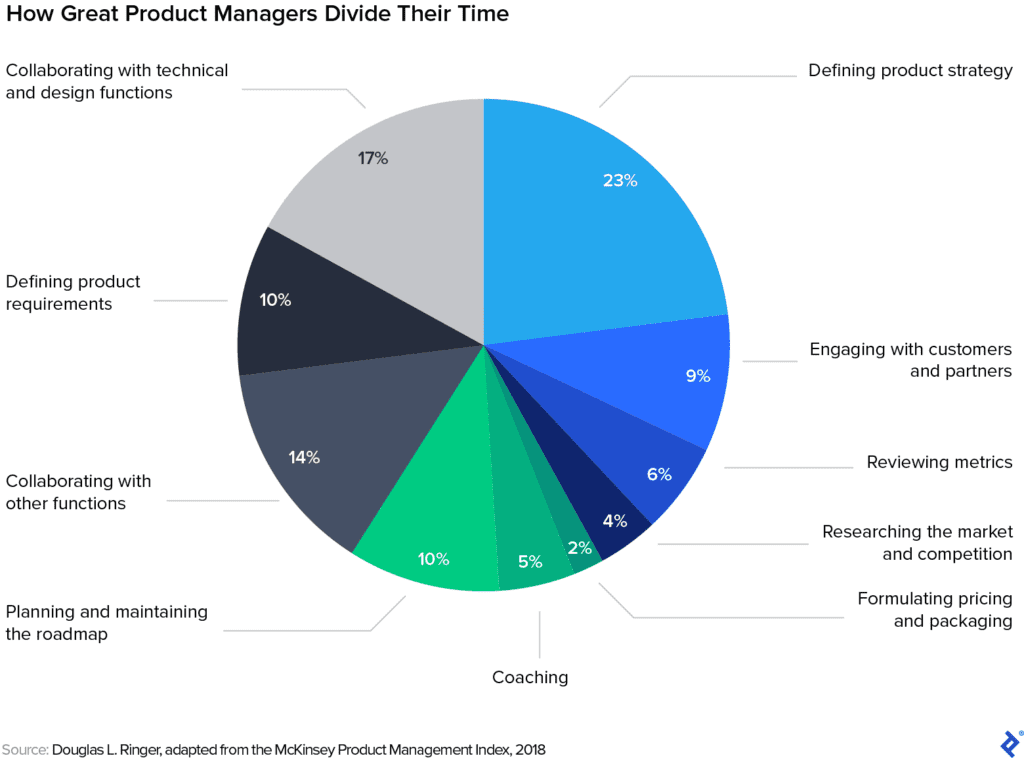
Great product managers excel in:
- Defining Product Strategy: Aligning product goals with overall business objectives.
- Collaborating Across Functions: Balancing customer needs with internal stakeholder requirements.
- Engaging with Customers: Understanding market demands and leveraging customer insights for product innovation.
- Analyzing Metrics: Focusing on impactful data to drive product success.
Case Study: The Impact of Effective Product Management
At a $250 million engineering firm facing declining revenues, a dedicated product manager led a turnaround project by:
- Conducting in-depth research and competitive analysis.
- Collaborating with offshore partners and internal teams.
- Implementing new sales strategies and product development processes.
Results Achieved
- Increased revenue by 17%.
- Reduced product line complexity by 80%.
- Enhanced inventory and supply chain efficiency.
- Improved gross margins.
Conclusion
Understanding the distinctions between a product owner and a product manager is vital for businesses aiming to optimize product development and market success. By aligning roles with specific business needs, leaders can ensure they hire the right expertise to drive growth and innovation.